
top of page
Modern two-storey brick house with a garage, surrounded by a wet driveway and cloudy sky.

Storm damage roof repair in Rushden

Dedicated storm repair service. Fully insured. Quick responses to roofing queries.

What matters after a storm

Loose materials checked

We assess what has moved, lifted or broken before the wind does more.

Short-term cover if needed

Temporary weather protection can buy time until permanent repairs are practical.

Wider damage assessed

Storm faults often run beyond the first missing tile or bent flashing.

Deal with storm damage before it spreads

After heavy wind or driving rain, the obvious damage is not always the only damage. A missing tile, a lifted flat-roof edge or a bent flashing can be the bit you notice first, while looser materials and weak fixings nearby are waiting for the next blow. We start by assessing the affected area, any active water entry and anything that may create further risk. Storm damage can also come from impact, such as debris striking the roof or roofline. With MTS Northants, the first step is getting a proper look at what has moved, broken or opened up. In Rushden, that quick, practical check can stop one bad night of weather turning into a longer repair job.
Grey slate roof tiles and metal flashing, shown on a cloudy day.
Dark gray slate roof tiles installed on a light wood timber building

Temporary protection and permanent repair

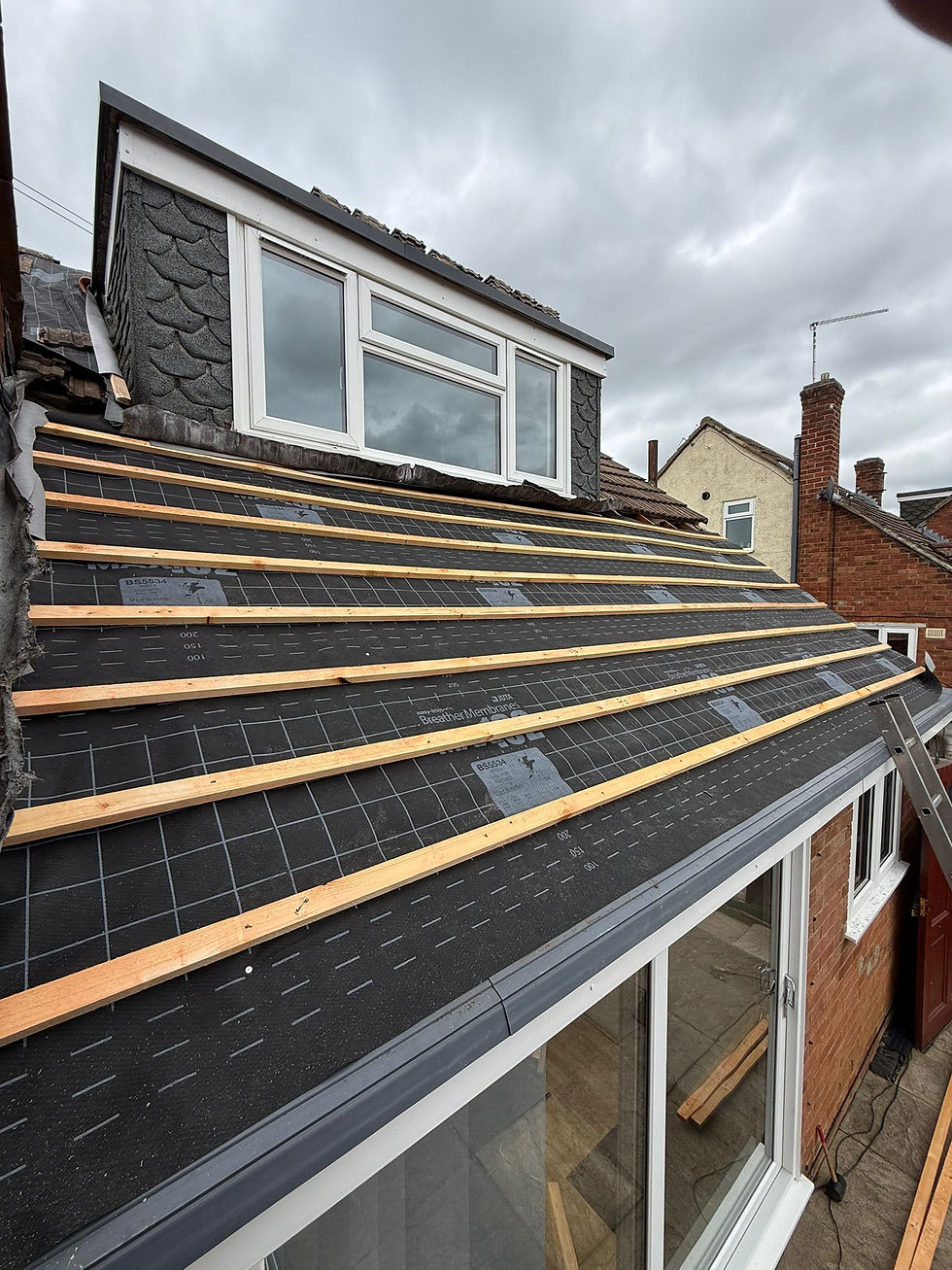
Sometimes full reinstatement can happen straight away. Sometimes the roof first needs short-term weather protection while conditions or materials catch up. We treat those as two distinct stages, not the same job with a different name. We also inspect adjacent coverings, fixings, ridges and roofline parts because storm damage often spreads past the most visible defect. A quotation from MTS Northants explains the immediate needs, the permanent repair needed after that and any extra areas the weather has affected beyond the first obvious break.

Frequently asked questions

What should we do first after storm damage?

If it is safe, note where the damage shows, which rooms are affected by water and whether any materials look loose or dangerous. Do not climb up for a closer look. We need to assess the area properly first, because the first visible break may not be the only part of the roof that has shifted or been weakened.

Can storm damage spread further than one visible fault?

Yes. Wind and impact can affect nearby coverings, fixings, ridges, flashings and roofline components even when only one section looks obviously damaged from the ground. That is why we inspect the surrounding area as well as the main break. If we only fix the first thing you can see, the follow-on trouble can soon show up in the next spell of weather.

What information helps before the inspection?

It helps to tell us when the damage happened, what the weather was doing at the time and which rooms now show signs of water entry. If you can see displaced tiles, slates or roofline parts from the ground, mention that too. Those details make the first visit more focused and help us judge whether short-term cover may be needed.

Talk through the damage while it is fresh

Call us to describe what the weather did, where the leak shows and any loose materials you can see from the ground.

bottom of page