Storm Damage Roof Repairs Rushden: What Homeowners Should Do After Missing Tiles, Leaks or Wind Damage
If you are searching for storm damage roof repairs Rushden, there is a good chance you have already spotted missing tiles, a fresh leak or visible damage after high winds and heavy rain. Acting quickly matters, but so does taking the right next step. Not every storm-damaged roof needs major work, but even a small problem can worsen if water keeps getting in.
At MTS Northants, we help homeowners from our base in Finedon near Wellingborough, carrying out practical roofing work across Rushden and surrounding areas. With around 10 years' hands-on experience and full insurance in place, we focus on clear advice: what has been damaged, how urgent it is, and whether a targeted repair is likely to solve the problem properly.
Storm damage roof repairs Rushden: first steps after wind or heavy rain
When a storm has just passed, safety comes first. The best immediate response is calm, sensible action rather than climbing up for a closer look.
Stay off the roof
Do not go onto the roof to inspect loose tiles, ridge pieces or flashing. Wet surfaces, unstable materials and hidden movement can make even a short check dangerous.
Keep children and pets away from any area where debris has fallen.
Avoid ladders unless there is a genuine emergency and you are properly trained to use them.
If damage is close to electrical fittings or water is coming through a ceiling light, only isolate the power if it is safe to do so.
Check for visible signs from ground level
You can often gather useful information without taking risks. Walk around the property and look up from a safe distance.
Missing, cracked or slipped tiles
Dislodged ridge tiles or mortar
Bent or detached guttering
Pieces of roof material on the ground
Water running in the wrong place during rainfall
Damage around porches, extensions, garages or flat roof sections
If possible, take a few clear photos. That can be helpful when arranging an inspection and may also be useful if you later need to discuss the damage with your insurer.
Reduce internal water damage
If water is already getting in, focus on limiting the internal impact while you wait for a professional inspection.
Move furniture, soft furnishings and stored items away from the leak.
Use a bucket or container to catch drips.
Place towels or protective sheeting on the floor if needed.
If a ceiling is bulging with trapped water, keep clear of the area and seek advice promptly.
What you should not do is assume the leak will stop once the weather improves. Many storm-related roofing problems show up properly only after the next period of rain.
Common signs your roof has suffered storm damage
Some problems are obvious. Others are easy to miss at first, especially if the roof looked generally sound before the bad weather.
Missing or slipped tiles
This is one of the most common issues after strong winds. A single missing tile can expose the underlay and roof structure to repeated water entry. Slipped tiles may also suggest fixings have loosened or that the surrounding roof covering has been put under strain.
Leaks, staining and damp patches
Storm damage does not always show itself immediately on the outside. Indoors, you may notice water marks on ceilings, damp loft insulation, fresh staining on walls or a musty smell after heavy rain. Water often travels before it becomes visible, so the drip you can see may not be directly below the damaged area.
Ridge, verge and flashing problems
High winds can loosen ridge tiles, affect mortar joints and expose weak points around flashing. These details are important because they help keep water out at changes in roof shape, around edges and where different materials meet.
Damage to flat roofs, garage roofs and extensions
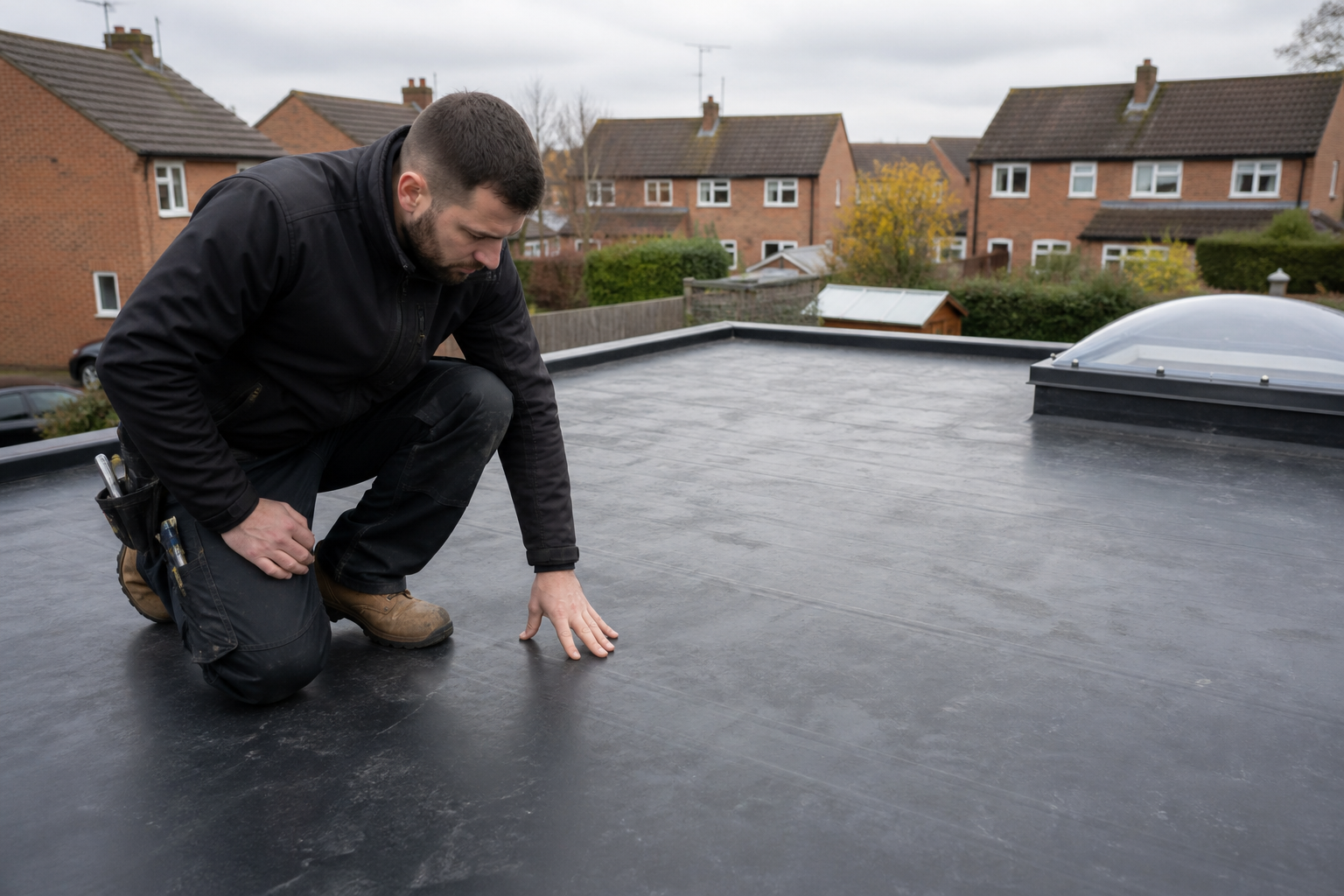
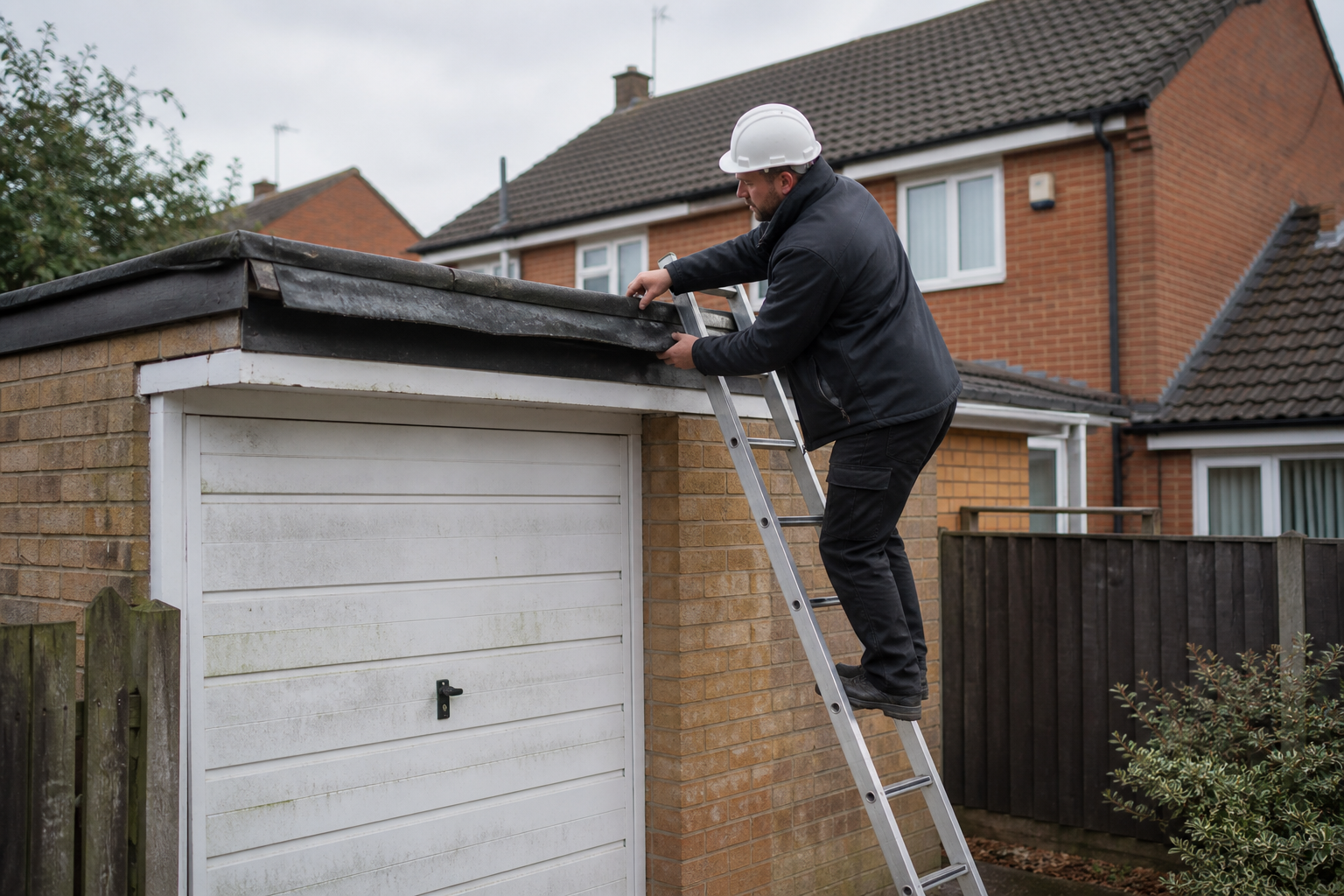
Storms do not only affect pitched roofs. Flat roofs can develop lifted edges, splits, punctures or drainage issues after bad weather. This is especially important on garages, porches and extensions, where wind-driven rain can exploit even a small opening.
Guttering, fascias and soffits under strain
Sometimes the roof covering is not the only issue. Heavy rain and wind can loosen gutter brackets, pull sections out of alignment or cause overflowing at joints. If rainwater is not being carried away properly, it can track back towards the roofline and add to the problem.
When roof damage becomes urgent
Not every storm issue is an emergency, but some situations do need prompt attention.
Active water ingress into living areas
Several missing tiles or visible gaps in the roof covering
Loose materials that could fall
Water entering around a chimney, roof window or junction
Ceiling bulging or signs of saturated plasterboard
Damage affecting both the roof and guttering after high winds
If any of these apply, it is sensible to arrange an inspection sooner rather than later. Waiting can turn a local repair into wider internal and structural work.
Can storm damage be repaired or is wider work needed?
This is the question most homeowners want answered first. In many cases, storm damage can be repaired successfully. The key is understanding whether the weather has caused one isolated fault or revealed a roof that was already close to failing.
When a targeted repair is often enough
A localised repair may be the right option when the rest of the roof is still in reasonable condition and the problem is limited to one area.
A few tiles have slipped or gone missing
There is a small leak linked to one detail or junction
Minor flashing or ridge issues are caught early
The roof covering still looks sound overall
The storm damage is recent rather than part of a long pattern of deterioration
In these situations, a focused repair can restore weather protection without the cost of more extensive work.
When broader repair work or replacement may be better value
Storms often expose weaknesses that were already there. If the roof is older, has been patched several times before or is showing wear in multiple areas, a bigger solution may make more sense.
Repeated leaks in different places
Widespread tile movement or failing ridge lines
Age-related deterioration across the roof covering
Rotten battens or moisture affecting underlying timbers
Flat roof materials lifting or failing in more than one section
The right answer depends on condition, not guesswork. We always recommend work that is proportionate to the roof in front of us.
If storm damage affects an older garage or outbuilding roof and asbestos is suspected, the work needs the right process. We are asbestos-aware and can coordinate safely with qualified specialists where removal is required.
Why a professional roof inspection matters
A proper inspection helps you avoid two costly mistakes: paying for unnecessary work or underestimating a problem that will quickly return.
At MTS Northants, we look at more than the obvious leak point. Storm damage can affect several connected parts of the roof system, so it is important to check the whole picture.
Roof coverings such as tiles, ridges and flat roof surfaces
Leadwork, flashing and edge details
Gutters, downpipes, fascias and soffits
Signs of trapped moisture or timber deterioration
Whether repair is likely to hold or if further work should be considered
The aim is simple: give you a straightforward recommendation so you can make an informed decision.
How we approach storm damage repairs in Rushden
We take a practical, joined-up approach to storm-related roofing problems. That means identifying the visible issue, checking for associated damage and recommending the repair work that actually fits the condition of the roof.
We carry out roof repairs for storm-related issues such as slipped tiles, leaking areas, damaged ridges and weather-exposed weak points.
Where bad weather has affected an extension, porch, garage or other low-level roof, our flat roof and rubber roofing work can help address splits, lifted edges and related water ingress.
If the storm has also affected the roofline, we can look at fascias, soffits and guttering so the repair is not left half-finished.
Because we provide clear quotations and straightforward advice, homeowners can move forward with confidence instead of uncertainty.
Frequently asked questions about storm damage roof repairs Rushden
How soon should I arrange a roof inspection after a storm?
As soon as you notice a problem or suspect damage. Even if the leak seems minor, water can reach underlay, insulation, battens and internal finishes before the issue becomes obvious. Early inspection usually gives you more repair options.
Can a few missing tiles really cause a serious leak?
Yes. A small opening can let in driven rain, especially during repeated bad weather. What looks minor from the ground can allow moisture into the roof structure, so it is worth getting checked promptly.
Will storm damage always mean a new roof?
No. Many roofs can be repaired successfully when the damage is localised and the rest of the roof remains sound. Wider work is usually considered only when the storm has exposed broader deterioration or repeated old repairs.
Should I wait until the next storm to see if the leak comes back?
No. If a leak has already appeared, the roof has already shown a weakness. Waiting can allow further water ingress and increase the scale of the repair. It is usually better to investigate while the signs are still fresh.
What should I do before an inspection or possible insurance claim?
If it is safe, take a few photos from ground level, make a note of when the damage appeared and move valuables away from any active leak. If you are considering an insurance claim, check your policy wording and avoid risky temporary fixes.
Arrange a straightforward roof inspection
If you have missing tiles, a new leak or visible wind damage, acting early is usually the best way to keep repair work proportionate. From our Finedon base near Wellingborough, we help homeowners in Rushden with practical roofing advice and clear recommendations after bad weather.
If you need storm damage roof repairs Rushden, arrange an inspection with MTS Northants and we will assess the damage, explain the sensible next step and help you understand the repair work your roof actually needs.